
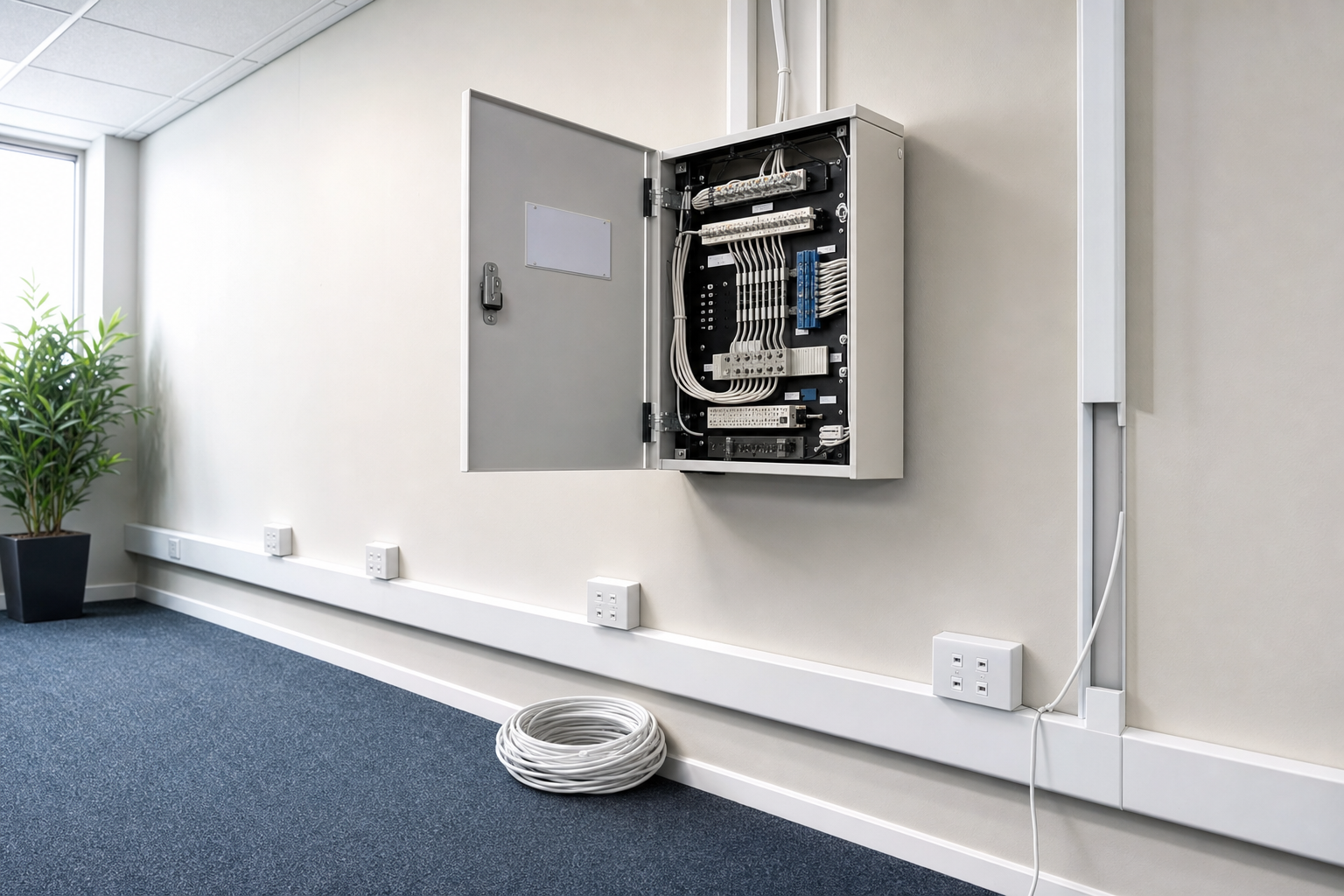
What makes telecoms cabling easier to manage
Better outlet planning
Well-placed points reduce awkward extensions and later rework.
Clear cabinet organisation
Traceable patching helps moves, maintenance and fault checks.
Space for future changes
Planning extension needs early reduces disruption later on.
Give voice and comms equipment a solid base
Telephone and voice systems still rely on the physical cabling behind them, even when the service sitting on top has changed. Poorly traced runs, awkward relocations and cabinet confusion can waste time every time a handset or outlet needs to move. We install the cabling that connects communications outlets, extensions, distribution links and compatible voice equipment across commercial premises. With RDI Comms Ltd, telecoms cable installation is planned so existing services are easier to maintain and future additions do not start with guesswork.
Plan outlets, patching and interfaces properly
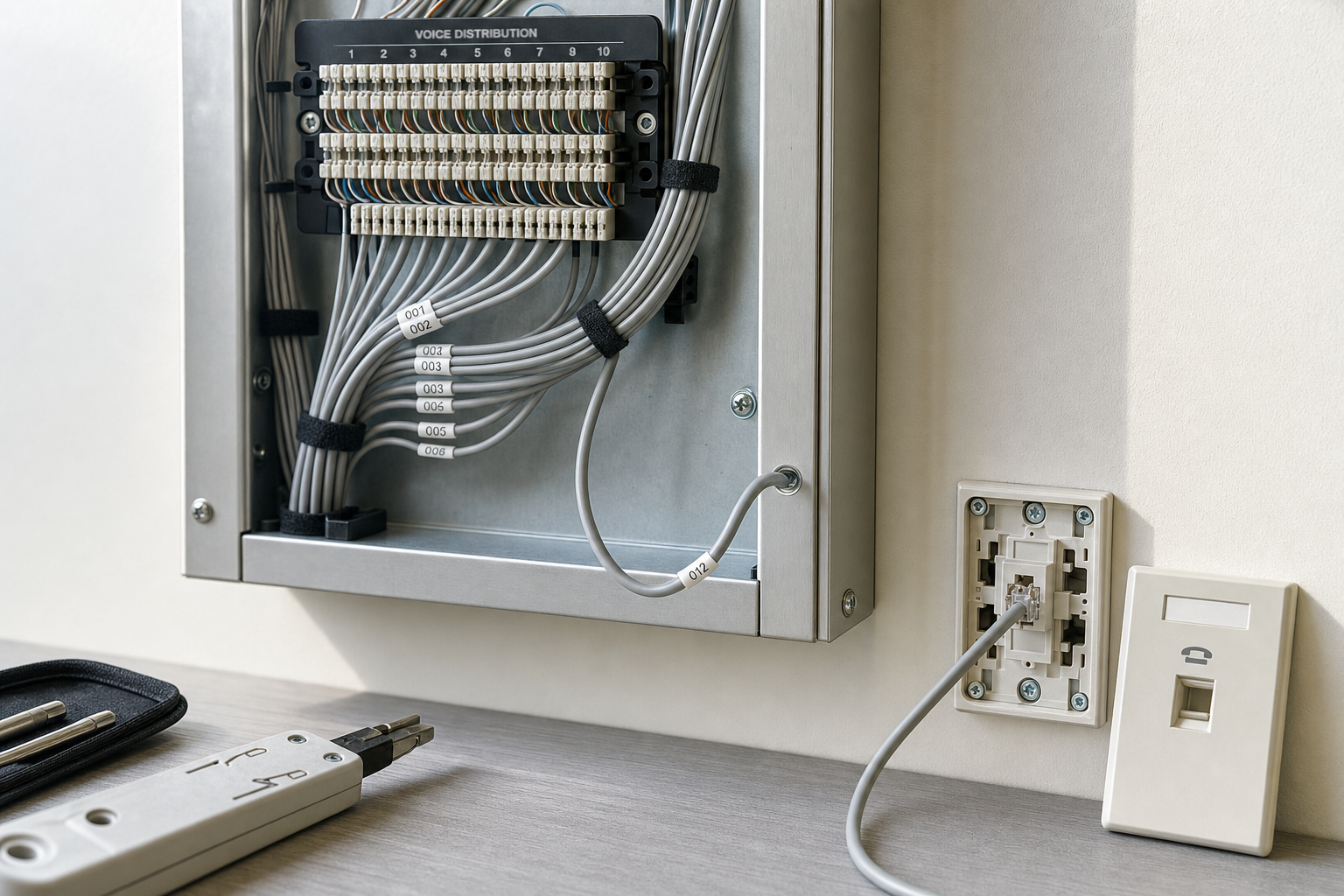
Modern voice services can share structured data cabling, but the physical layout still matters. Endpoint locations, equipment interfaces, route constraints and the likelihood of later extensions all shape the right approach. We organise cabinet connections, label routes clearly and build traceability into the finished system so moves and changes are easier to manage. A project with RDI Comms Ltd starts with a free consultation, giving you space to explain the equipment in use and how the site needs to communicate.
Frequently asked questions
Can voice services run over structured data cabling?
Often, yes. Many modern voice systems use the same physical cabling approach as other networked devices. The important part is planning outlets, patching and equipment connections so the service can be managed cleanly.
What information should we prepare before telecoms work?
It helps to know where outlets are needed, what equipment interfaces are involved, which routes are available and whether you expect future extensions. That makes the initial discussion much more useful.
Why is labelling important for telecoms cabling?
Clear labels and traceable routes save time whenever a handset, outlet or cabinet connection needs to move. They also make fault-finding more straightforward if service issues appear later.