
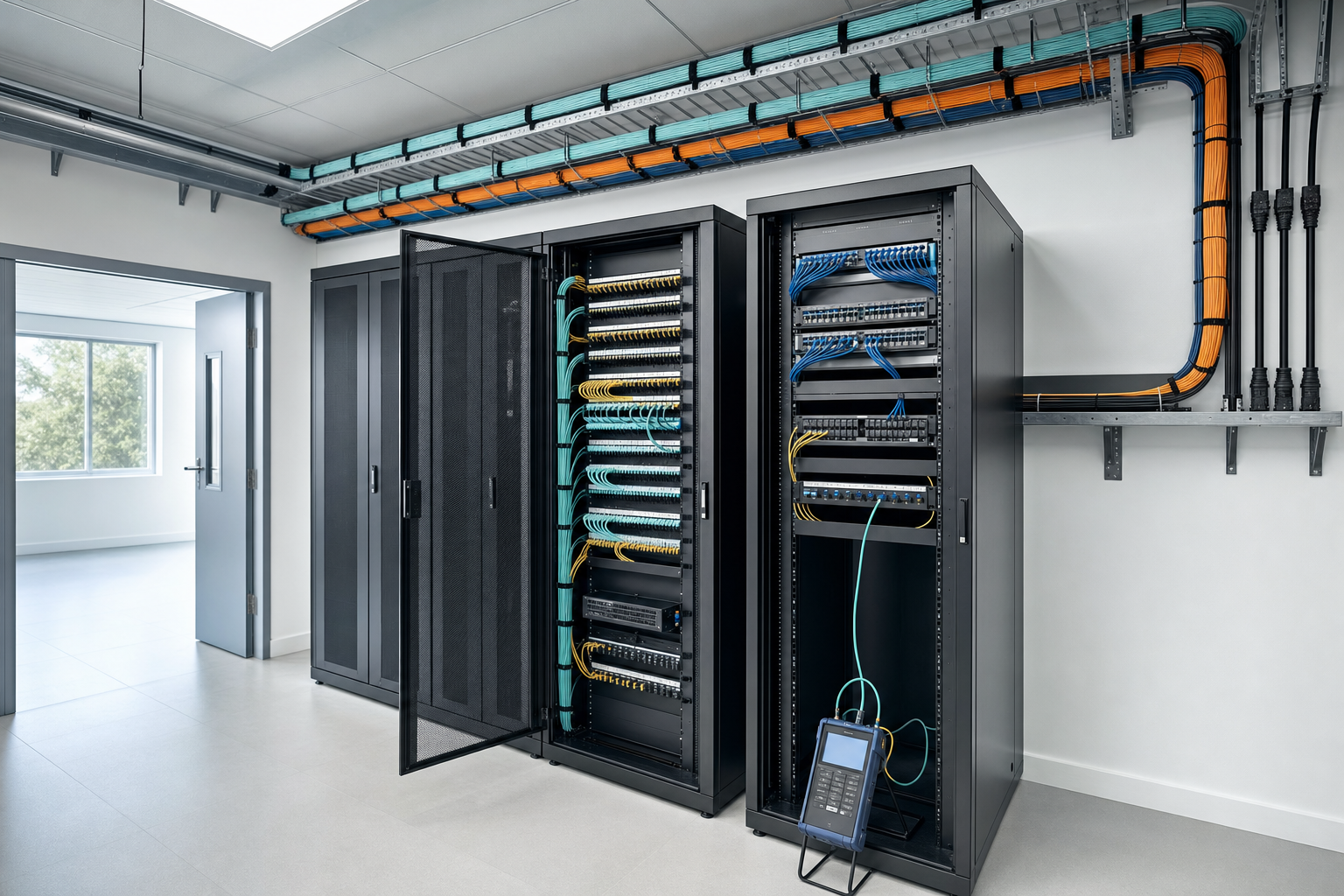
What keeps infrastructure manageable
Readable communications spaces
Cabinets and patching stay easier to work in when layout is planned early.
Backbones that fit the site
Fibre and copper are used where their role and distance make sense.
Capacity with room to grow
Connection density and expansion plans shape the install from the start.
Build the physical base your network needs
If the physical layer is poorly planned, every later change becomes harder than it should be. Network infrastructure installation is about building the routes, backbone links, communications spaces, patching and device connections that support the rest of the network. We start with the shape of the site, the equipment positions, connection density and the capacity you need now and later. With RDI Comms Ltd, the result is meant to be maintainable, not just complete, so cabinets and routes remain workable after the first phase is signed off.
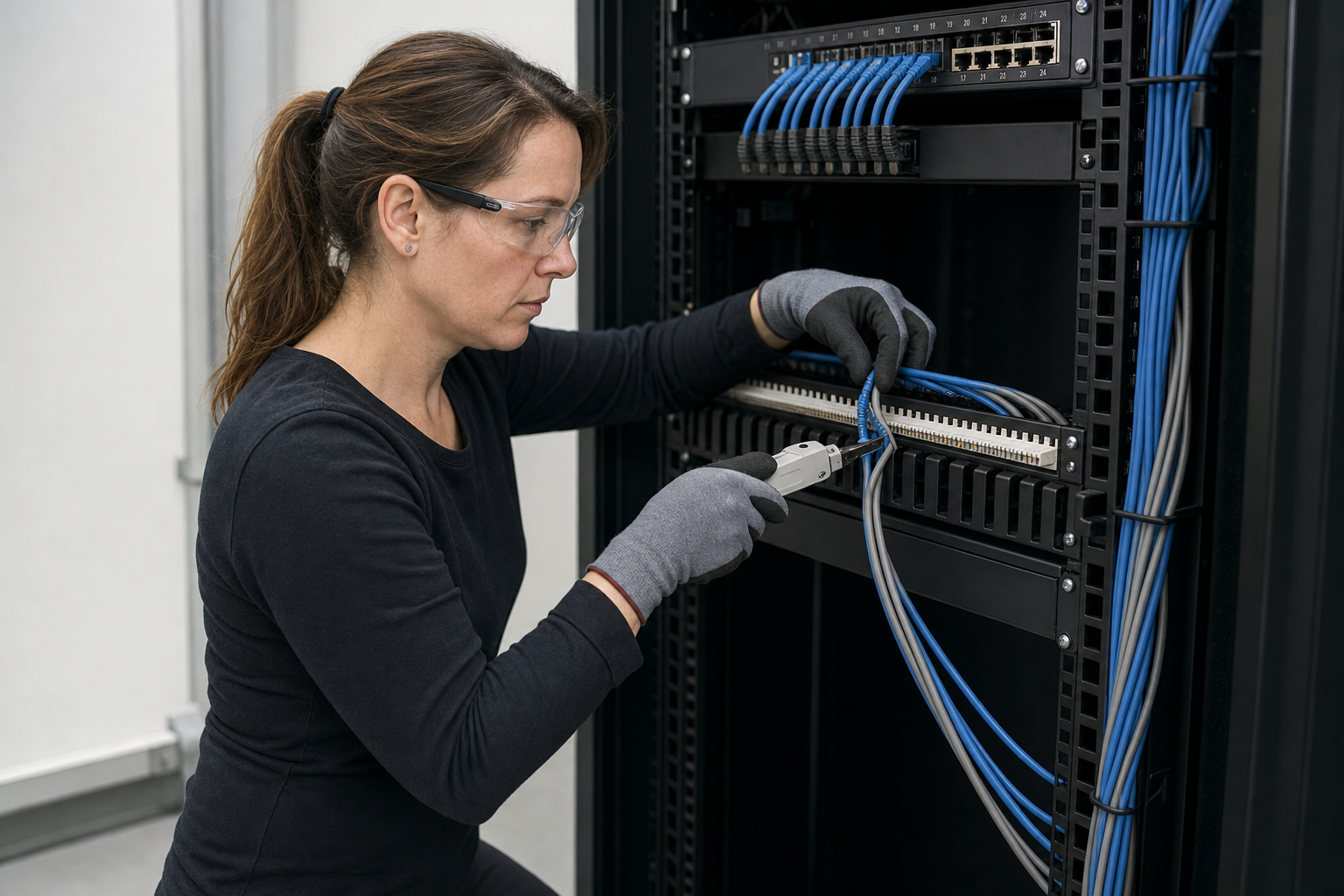
Plan cabinets, backbones and future capacity
Large sites usually need more than a collection of local cable runs. Cabinets, patch panels, cable management and consistent identification all matter, and the mix of copper and fibre needs to match the building or campus layout. We coordinate the sequence from survey and pathway planning through cabling, termination, testing and handover. A project with RDI Comms Ltd starts with a free consultation so you can explain the size of the site, the communications spaces available and the growth you need the infrastructure to support.
Frequently asked questions
What counts as network infrastructure, not just cabling?
It is the wider physical foundation of the network, including cable routes, backbone links, communications spaces, patch panels, cabinets and device connections. It is the framework that lets individual links work as part of a bigger whole.
Why are cabinets and cable management so important?
Because that is where the day-to-day reality shows up. Good cabinet layout and cable management make patching, maintenance and additions far easier, especially on larger sites with many live connections.
When should fibre be part of the infrastructure?
Fibre is often used for backbone links across bigger buildings or between site areas where distance or capacity makes copper less suitable. Local device links may still be better handled in copper.