
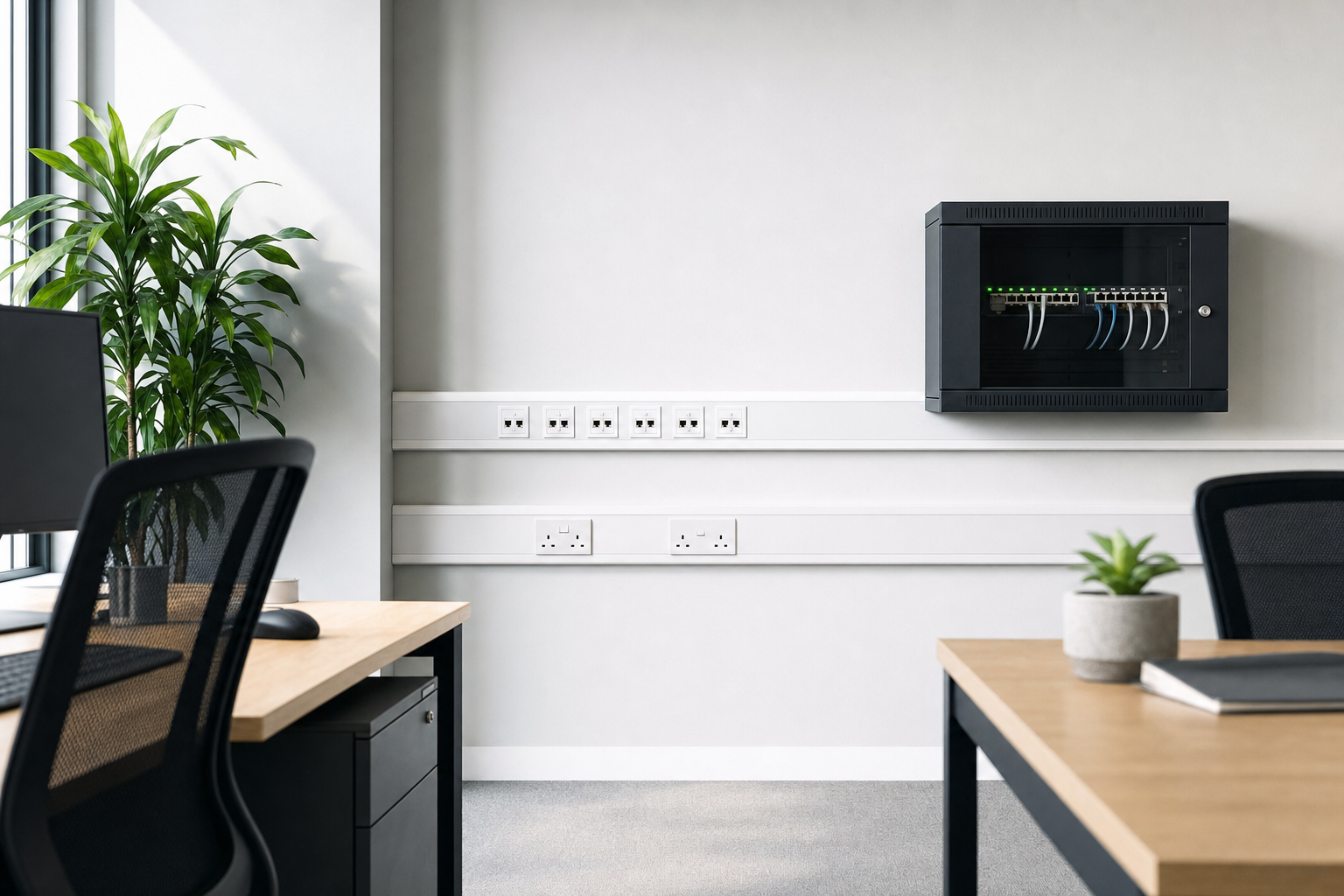
What makes copper installations practical
Tidy cabinet patching
Orderly panels make everyday moves, adds and changes quicker to handle.
Consistent outlet labels
Clear numbering cuts down time spent tracing the right link later.
Media suited to the task
Category choice is matched to speed, distance and connected equipment.
Get outlets and device links working properly
Copper cabling still does a large share of the everyday work in commercial networks. It connects outlets, patch panels, telephones, cameras, access points and other compatible equipment, so the way it is routed and terminated has a direct effect on reliability. We plan runs around cabinet locations, outlet positions and site conditions, using suitable containment and keeping separation from electrical services in mind. With RDI Comms Ltd, copper network cabling is installed to stay organised once patching, adds and maintenance begin.
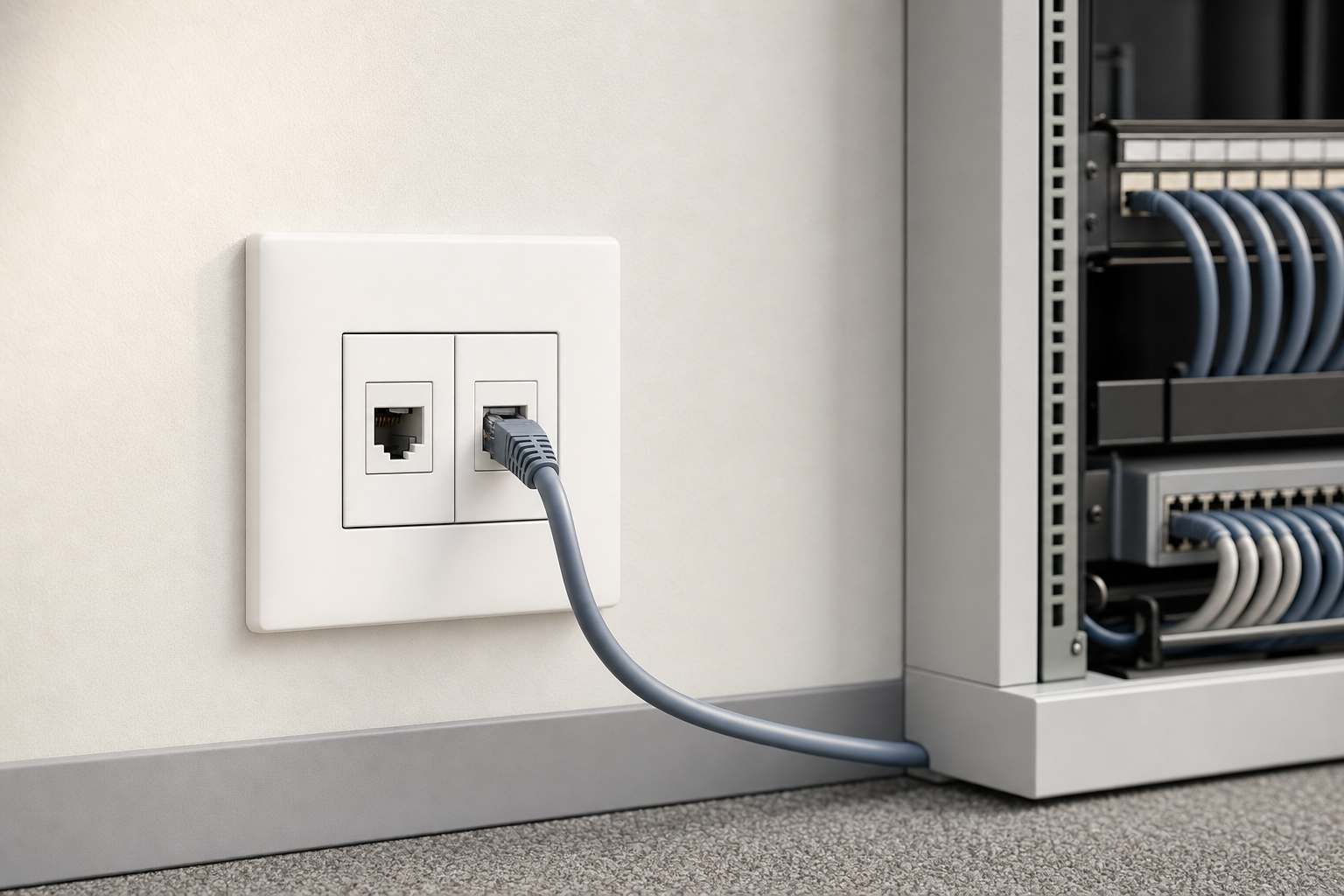
Choose the right category for the job
You do not need a jargon-heavy answer when deciding between cable categories. What matters is the speed you need, the run length, the environment, the connected equipment and how much headroom you want for future capacity. We terminate at outlets and panels, label links consistently and test the completed runs so wiring accuracy and performance can be checked before handover. A project with RDI Comms Ltd starts with a free consultation to pin down the scope before the first cable is pulled.
Frequently asked questions
What is copper cabling used for in a network?
It is commonly used for local links to outlets and devices such as computers, phones, access points and cameras. It is the everyday wiring that connects users and equipment back to patch panels and network hardware.
Why does separation from electrical services matter?
Keeping data cabling suitably separated from electrical services helps reduce interference risk and supports better link performance. It is also part of building neat, maintainable cable routes that are easier to work on later.
Do you test copper links after installation?
Yes. Post-installation testing helps confirm continuity, wiring accuracy and link performance. That gives you a clearer handover and helps spot issues before the cabling becomes part of daily operations.