
Why fibre work needs extra care
Protection during pulling
Controlled handling helps prevent stress that can weaken performance.
Clean terminations
Careful connector work supports the signal quality the link is meant to carry.
Tested optical results
Recorded checks show the finished link is performing as expected.
Use fibre where copper stops making sense
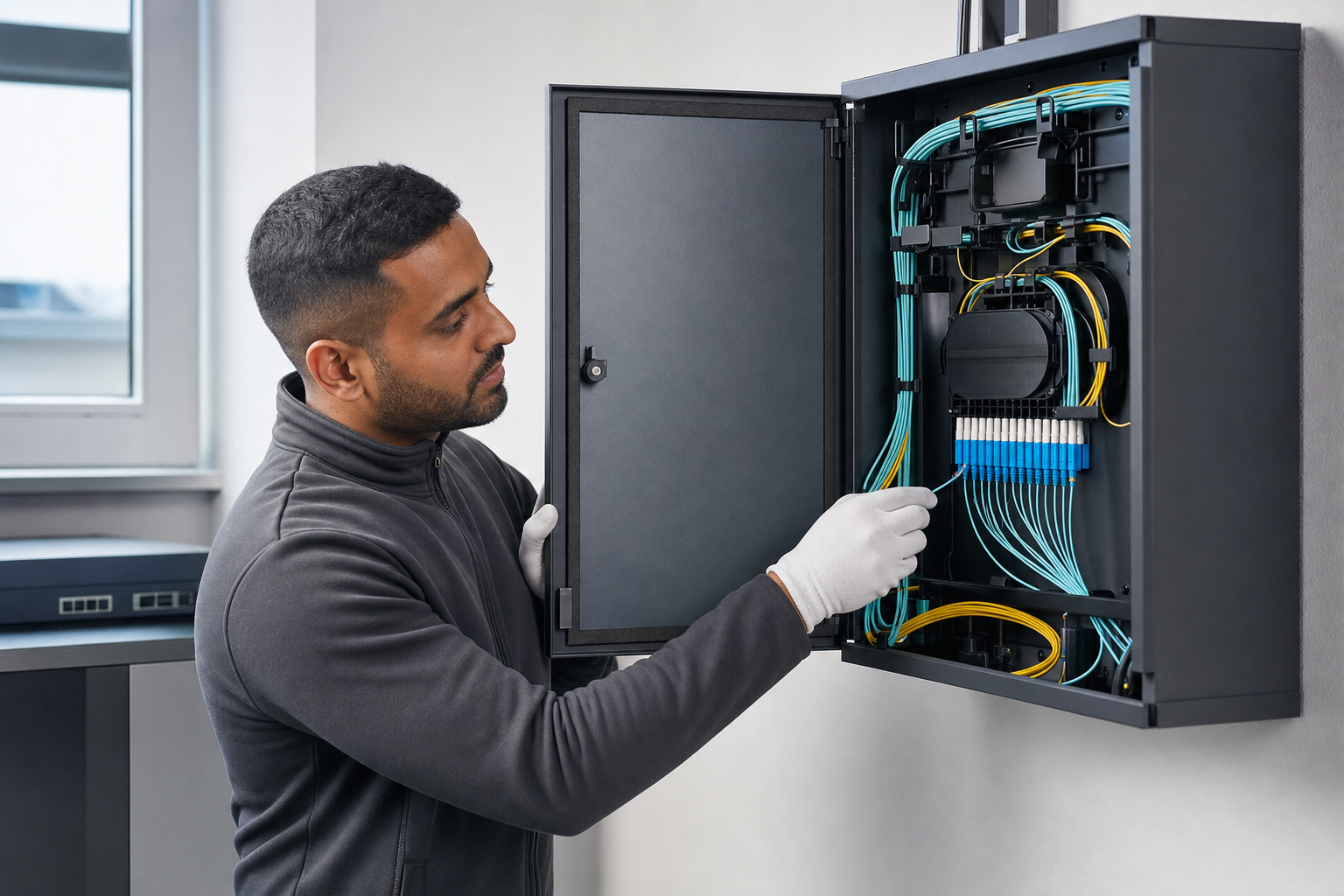
Some network links need to travel further, carry more traffic or avoid the electrical interference that can trouble other media. That is where fibre optic cabling comes into its own. We install fibre for high-capacity backbones, building-to-building links and other longer runs where optical performance matters. Route preparation, pulling methods, bend-radius control and enclosure organisation all affect the finished result, so the work needs care rather than speed alone. With RDI Comms Ltd, the objective is dependable signal performance from a tidy, traceable install.
Select the fibre type that fits the link
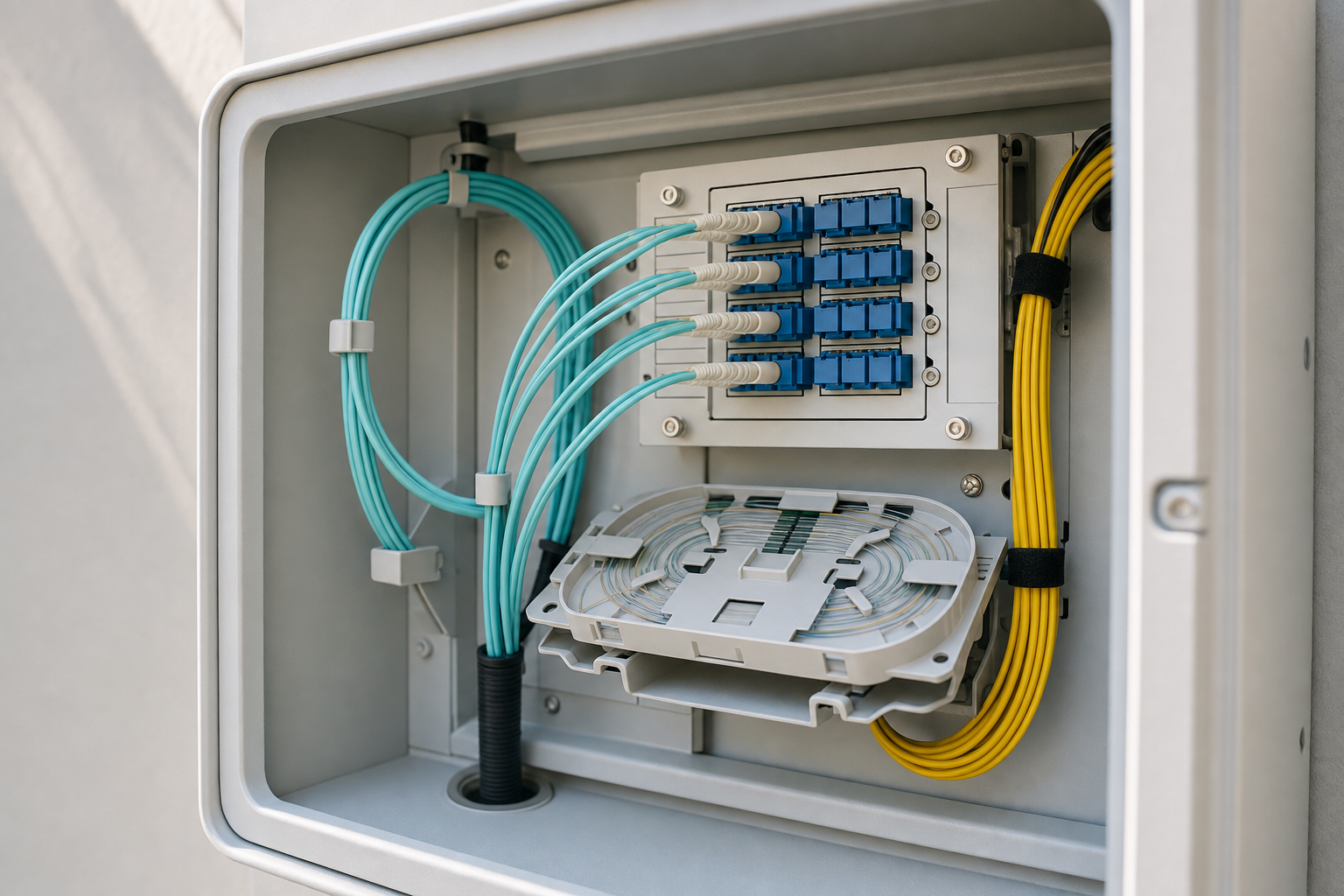
Single-mode and multimode fibre are not interchangeable choices. Distance, connected equipment and the performance you need all help decide which is the better fit. We survey the route, confirm endpoints, install and terminate the cable, then carry out optical testing and record the results. Connector cleanliness is treated seriously because small issues there can affect the whole link. A project with RDI Comms Ltd starts with a free consultation so the route, interfaces and testing needs are understood before installation begins.
Frequently asked questions
How do we choose between single-mode and multimode fibre?
The right choice depends on run length, the equipment at each end and the performance required. Single-mode is often used for longer distances, while multimode suits shorter optical links. We review the job before installation.
Why is bend-radius control important with fibre?
Fibre can lose performance if it is bent too tightly during installation or dressing. Keeping to suitable bend-radius limits helps protect the cable and supports reliable optical transmission once the link is live.
What testing is done after fibre installation?
We carry out optical testing after termination and record the results. That helps confirm the completed link is performing properly and gives useful information for handover, support and future network management.