
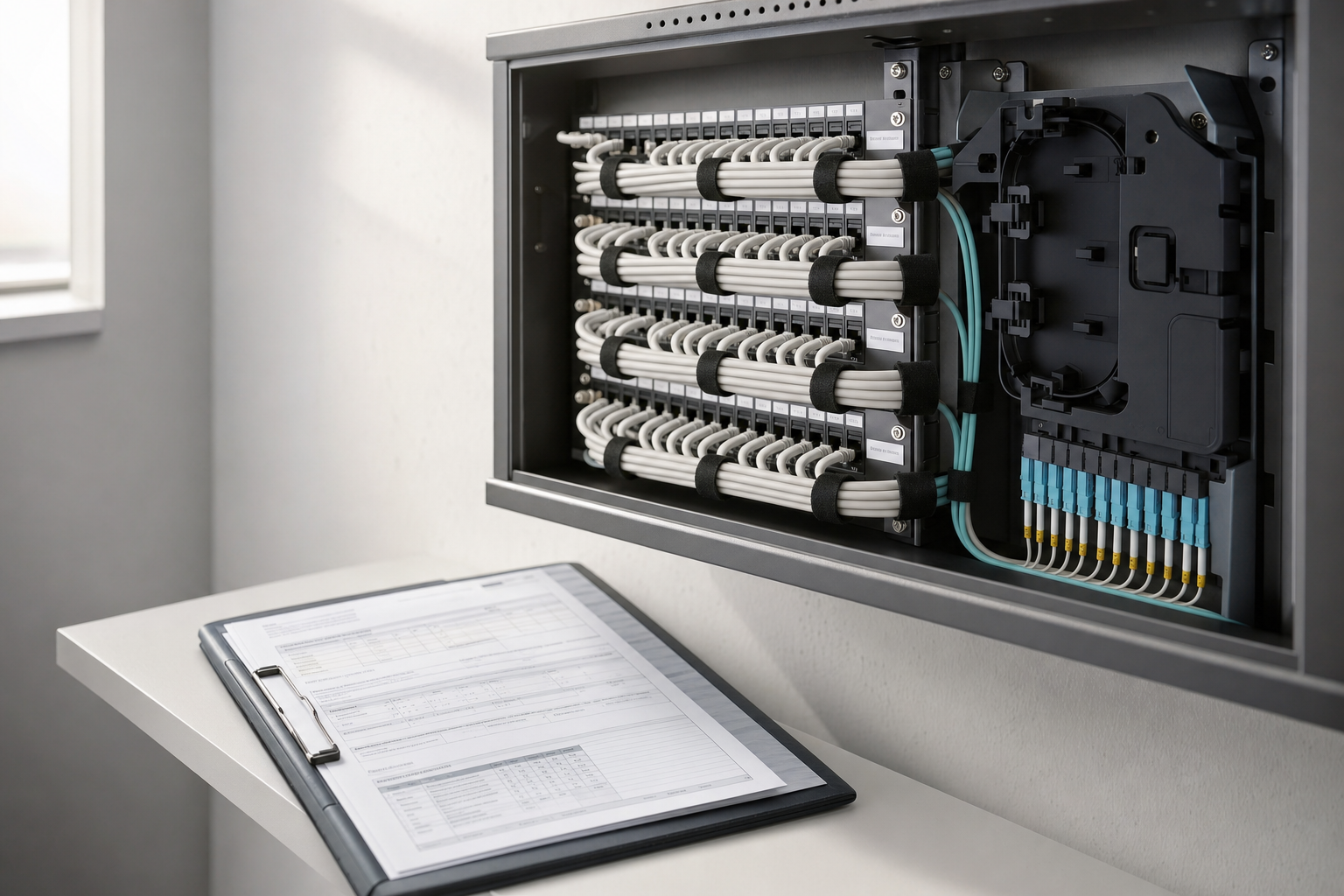
Why testing saves time later
Evidence, not assumptions
Measured results help you pinpoint the problem before more work is done.
Useful handover records
Labelled reports support sign-off, audits and future troubleshooting.
Checks for existing links
Testing can investigate faults in cabling that is already in service.
Find out what the cabling is really doing
When links are slow, dead or unreliable, the fault is not always obvious from the cabinet door. Data cable testing helps show whether the issue sits in the wiring, the termination or the performance of the link itself. We test new and existing cabling on site, checking for faults such as damaged links, poor terminations and wiring problems that can stop a network performing properly. With RDI Comms Ltd, the point of testing is practical: you get evidence you can act on rather than guesswork around an intermittent fault.
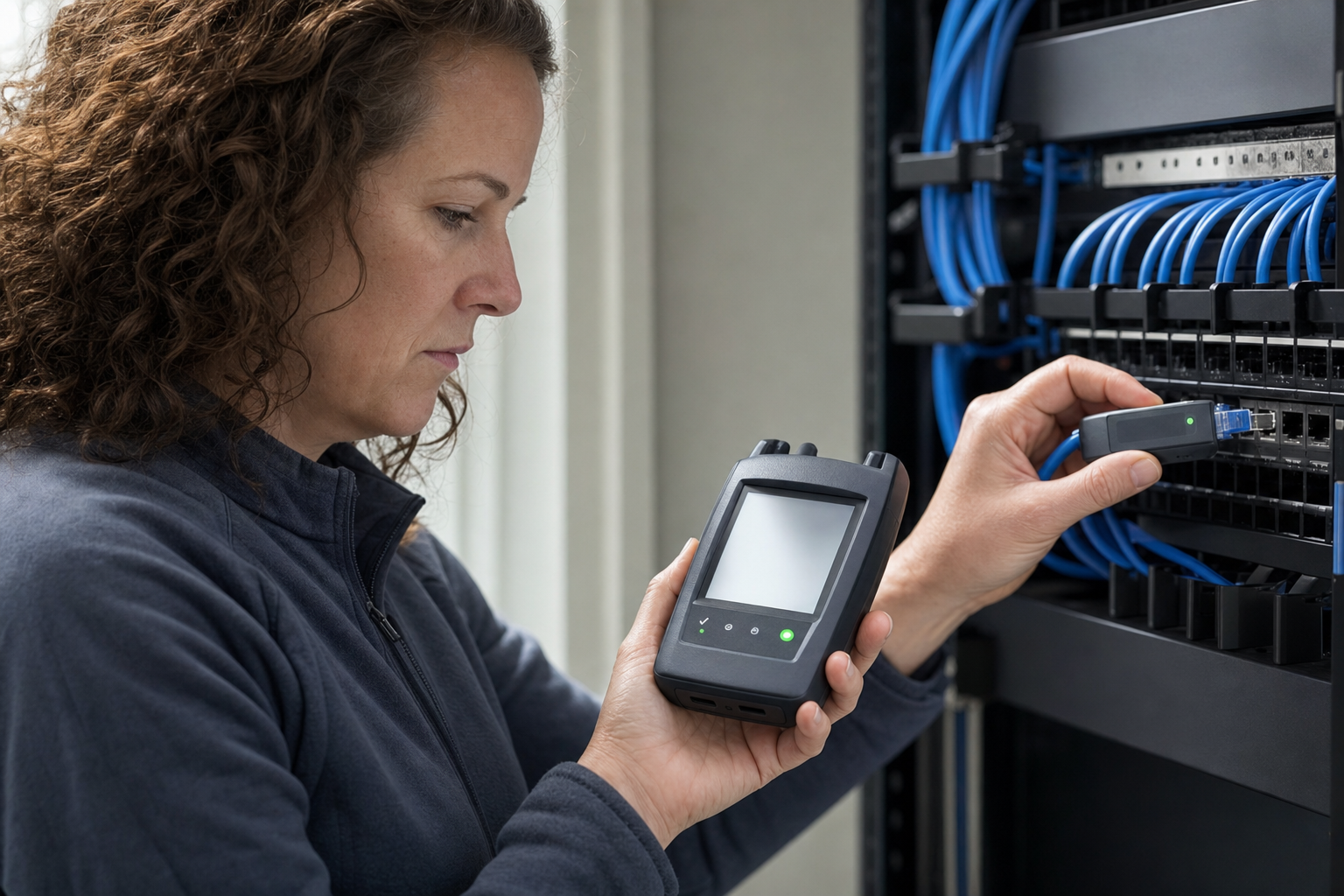
Use the right level of testing for the job
A quick connection check is not the same as certification. Where basic proving is enough, we can confirm that a link is connected correctly. Where handover or compliance needs deeper evidence, certification-level testing checks the link against the relevant performance requirements. For copper, that can include wire map, length, signal loss and interference. For fibre, we assess optical loss and link condition. A project with RDI Comms Ltd starts by identifying the links properly so testing, rectification and reporting can follow in an orderly way.
Frequently asked questions
What is the difference between testing and certification?
Basic testing shows whether a link is connected and working at a simple level. Certification goes further by measuring performance against the standard the link is meant to meet, which is often important for handover or formal records.
Can you test both copper and fibre cabling?
Yes. Copper testing can include wire map, length, signal loss and interference checks. Fibre testing looks at optical loss and link condition. The right method depends on the cabling type and what you need from the results.
What information helps testing go more smoothly?
Accurate labels and access to both ends of the link make a big difference. If you already know which outlets are faulty or have previous records, sharing that information can speed up investigation and final reporting.