
Why organised cabling pays off
Easier workplace changes
Planned outlet positions make desk moves and additions less awkward.
Clearer patching
Orderly panels help technical teams see what is connected and where.
Room to expand
A thought-through layout supports extra users and future systems.
Build a network that makes sense later
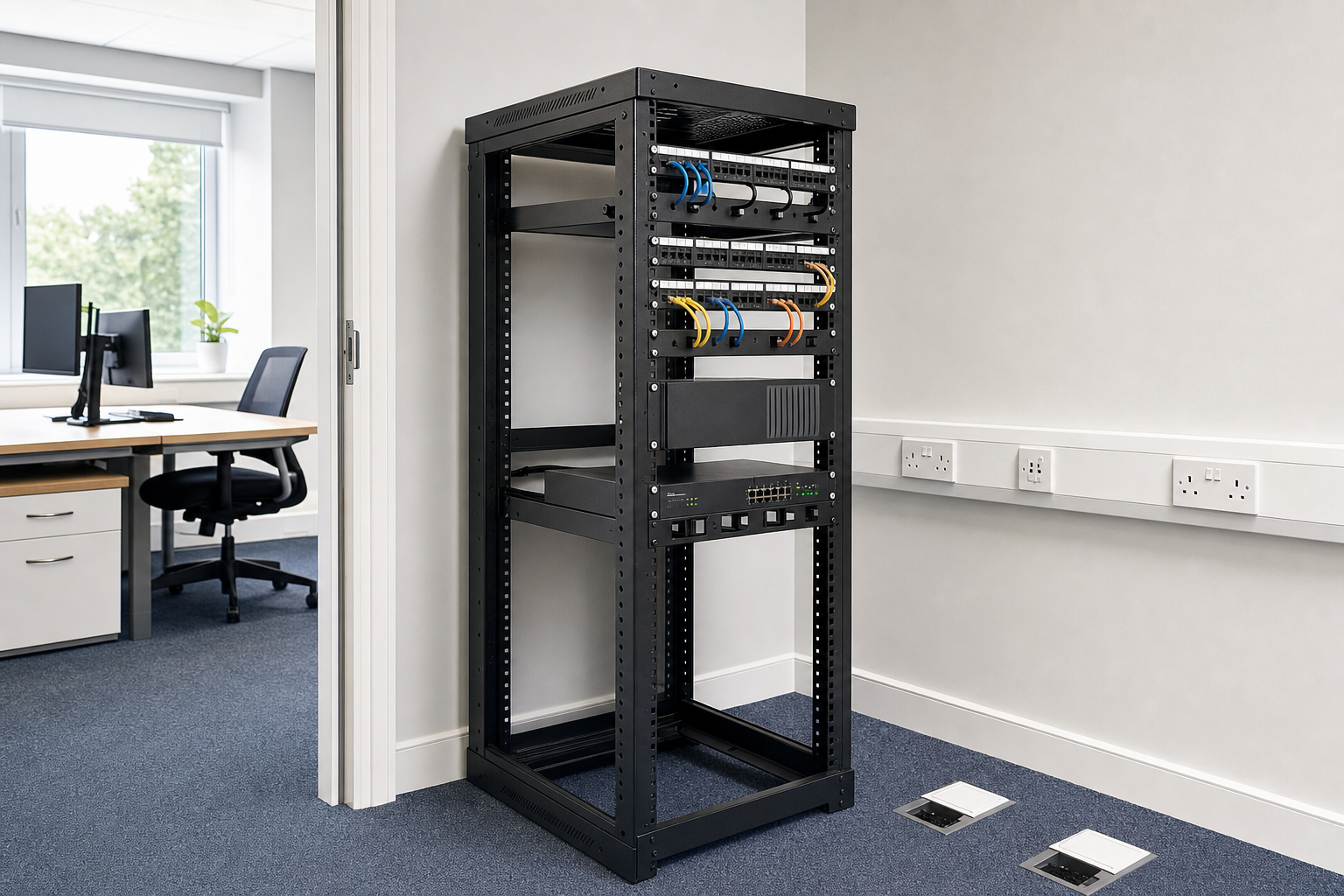
When outlets have grown in bits and pieces, even a small office change can turn into tracing old runs and guessing what is patched where. Structured data cabling gives you a physical network with planned outlets, organised patch panels, backbone links and cable routes that can be identified properly. We shape the layout around desks, wireless access points, telephones and other connected systems so the building works now and stays easier to extend. With RDI Comms Ltd, the aim is simple: fewer unknowns when your site changes.
Plan for layout, density and future growth
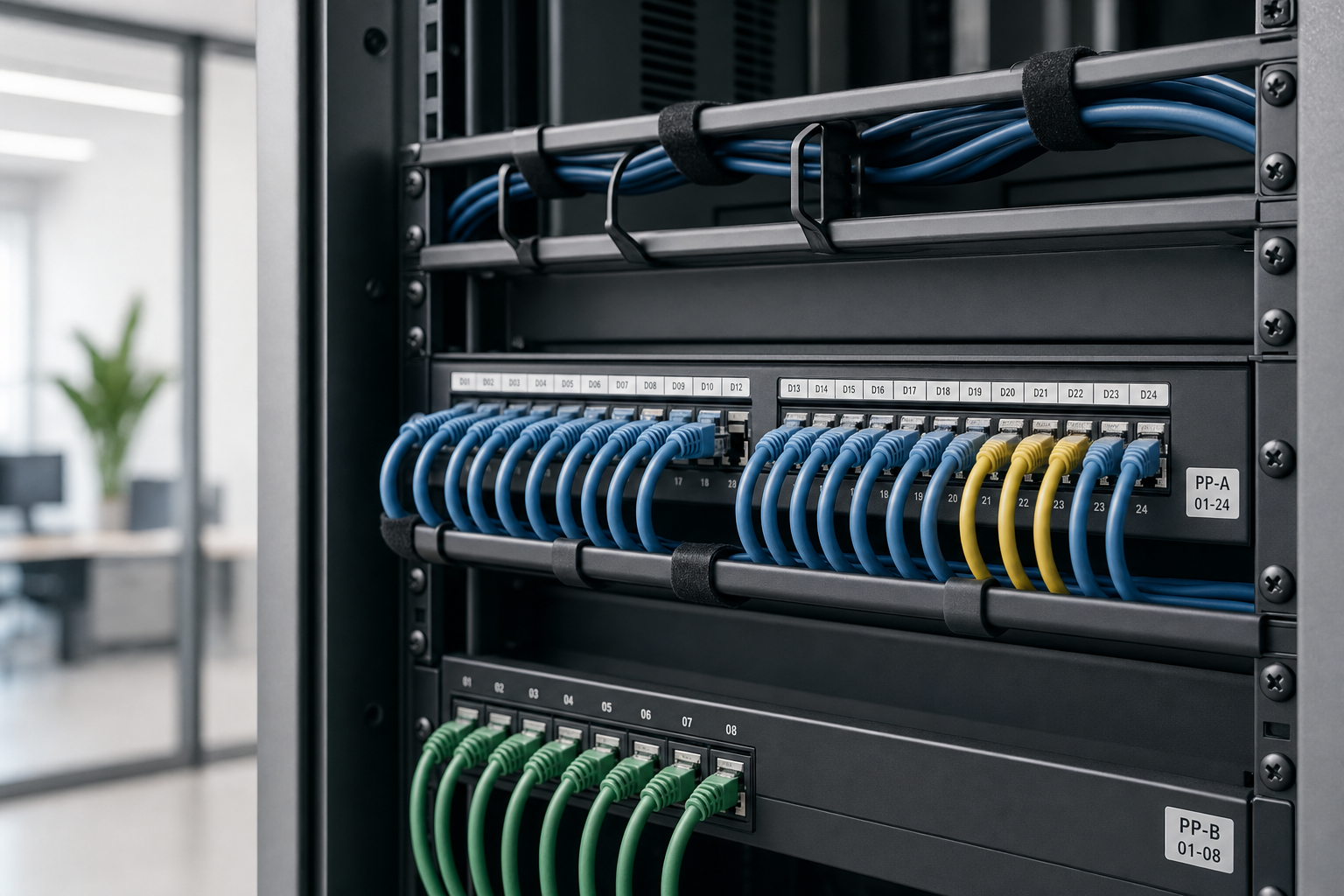
Floor shape, user numbers, equipment locations and cable distances all affect how a structured system should be built. We can combine horizontal copper runs with fibre backbones where a building needs higher-capacity links between areas. Labelling, patch-panel order and test records are part of the job, not an afterthought, because they make fault-finding and later alterations much less disruptive. A project with RDI Comms Ltd starts with a free consultation so the scope is clear before installation begins.
Frequently asked questions
What makes cabling structured rather than ad hoc?
A structured system follows a planned layout with consistent outlets, organised patching, backbone links and labelled routes. That means the network is easier to understand, test and extend than a collection of one-off cable runs.
Do structured systems use both copper and fibre?
Often, yes. Copper usually handles local outlet runs to desks or devices, while fibre is used for backbone links between cabinets, floors or areas that need more capacity or greater distance.
Why do labels and test records matter so much?
They save time once the install is complete. When each link can be identified and its test result is recorded, faults are quicker to trace and later changes are less likely to disturb the rest of the network.